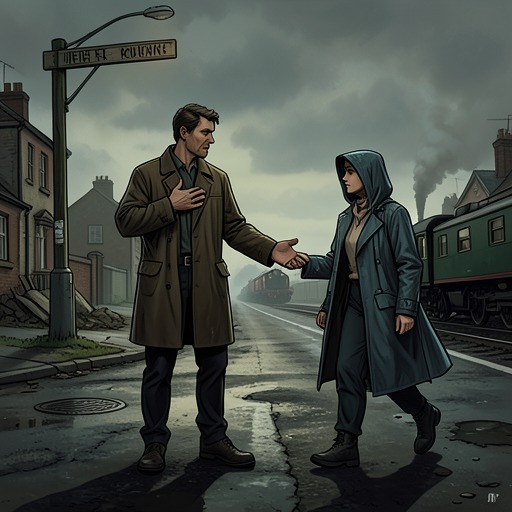
This road will take you wherever you want to go
Small Things Like These“This road will take you wherever you want to go” is a direction offered to Bill Furlong by an old man on a fogbound country road. Its plain promise of movement gains a more troubling resonance when Furlong recalls it alongside his earlier refusal to help a girl who wanted to drown in the river: the road points toward choice, but does not decide what he will do.
The Encounter on the Back Road
After leaving the convent, Furlong realizes he has missed his turn and is driving in the wrong direction. Fog hangs over the winding roads; unable to turn around, he takes a succession of side roads, passing a hayshed and a loose puckaun before coming upon an old man slashing dead thistles with a billhook. Furlong pulls up to ask where the road will take him.
The old man sets down the hook, leans on its handle, and looks in at him before answering, “This road will take you wherever you want to go, son.” The reply does not identify a destination or offer practical directions. Instead, it gives Furlong the road back as a matter of personal direction: where it leads depends on where he wants to go.
A Saying Recalled
The phrase returns in Furlong’s thoughts as he crosses the River Barrow. He is uneasy, remembering the Dublin girl who had asked him to take her there so she could drown, and his refusal. The old man’s words belong to another moment, on a confusing road in the fog, but Furlong now places them beside that decision.
That recollection makes the saying more than a curious answer to a request for directions. Its open-ended promise echoes Furlong’s awareness that he has already chosen not to take the girl where she asked to go. The text does not make the old man’s remark an instruction or spell out what Furlong will do next; it leaves the phrase’s force in the contrast between the freedom it voices and the human consequences of choosing a direction.
Literal Direction and Moral Choice
The expression holds two meanings in tension. In its immediate scene, it answers a practical question on roads where Furlong has lost his way. In the later recollection, the words acquire moral weight because they sit beside a request involving life and death, and a refusal that continues to trouble him.
The phrase offers no map and no guarantee that a chosen road will be easy. Its significance lies in making direction sound like an exercise of will, then returning that idea to Furlong at a moment when his earlier choice remains unsettled. The road can take him wherever he wants to go; the unresolved question is what he will choose to want.